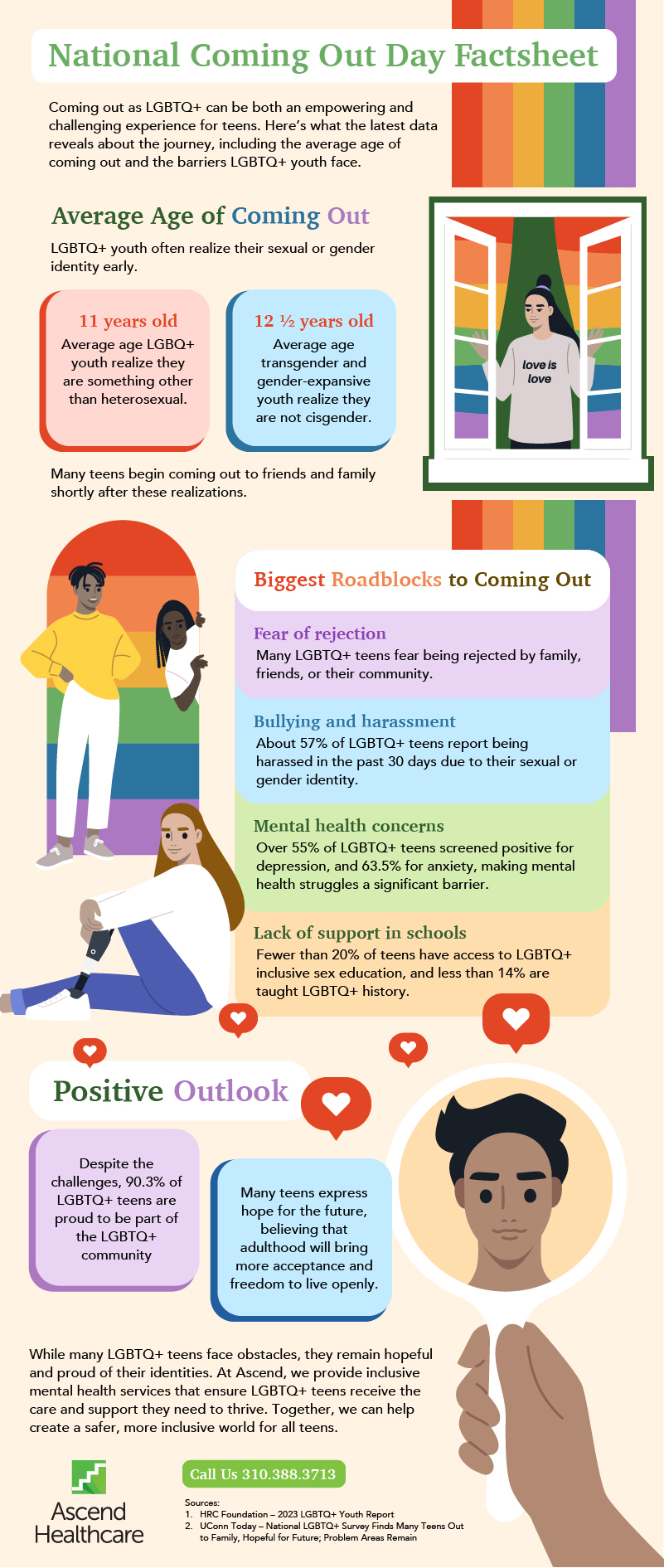
Coming out as LGBTQ+ can be both a deeply personal and an emotional process. Whether you’re considering how to come out to your friends or how to come out to your family, this moment is a blend of excitement and anxiety. In honor of National Coming Out Day on October 11th, we’re sharing some tips to help guide you through the process and remind you that coming out is a courageous act of self-expression.
1. Come Out When You’re Ready
Coming out is a significant decision, and the timing should be entirely your own. Whether you’re thinking about coming out to your parents, friends, or other loved ones, it’s important to take your time. You don’t need to rush into it. The most important thing is that you feel emotionally ready to share your story and that you have taken the time to process your own feelings about your identity.
2. Plan What You Want to Say
When thinking of how to come out to your friends, it can be helpful to plan ahead and consider what you want to say beforehand. You might want to write down your thoughts or practice with someone you trust. Knowing what you want to express can help you stay calm and confident during the conversation. Here are some tips for planning your conversation when coming out to your parents, family, or friends:
- Write down key points.
- Practice with a trusted person.
- Prepare for questions.
3. Choose the Right Time and Place
Timing and location matter when figuring out how to come out to your parents or friends. Try to choose a moment when they are calm and available to listen without distractions. Having the conversation in a private and comfortable setting can help everyone feel more relaxed, making it easier to talk openly.
4. Be Prepared for a Range of Reactions
People may react in different ways when you come out. Some may be supportive right away, while others might need more time to adjust. When planning how to come out to your friends and family, be prepared for a range of emotions, and remember that not all reactions will be positive immediately. It’s important to give your loved ones time to process what you’ve shared, especially if this is new information for them.
5. Surround Yourself with Support
Whether it’s a close friend, a trusted adult, or a community group, having a support network in place before and after coming out can make the process less isolating. If you’re unsure how to come out to your family, hearing from others who have gone through a similar experience can provide valuable guidance. Ask peers some of these questions for more advice:
- How did you come out to your friends and family?
- When was the right time for you to come out?
- What were their reactions?
- Did anyone need extra time to cope with the news?
6. Be Proud of Who You Are
Coming out is an act of self-love and bravery. Regardless of the reactions you receive, remember that being true to yourself is something to be celebrated. National Coming Out Day is about recognizing your courage to live authentically and embracing your identity with pride.
Ascend Is Here to Help
Coming out is a personal journey, and there’s no right or wrong way to do it. Whether you’re thinking about how to come out to your parents or exploring how to come out to your friends, take it at your own pace.
As an organization that supports the LGBTQIA+ community, we’ve been there for the preparation and the results of many coming out moments. Our team is here to support you and your family on your journey, offering compassionate care in a safe and inclusive environment. You don’t have to do this alone — we’re here to help.
Call 310.388.3713 or reach out online for more on our teen counseling services in LA.