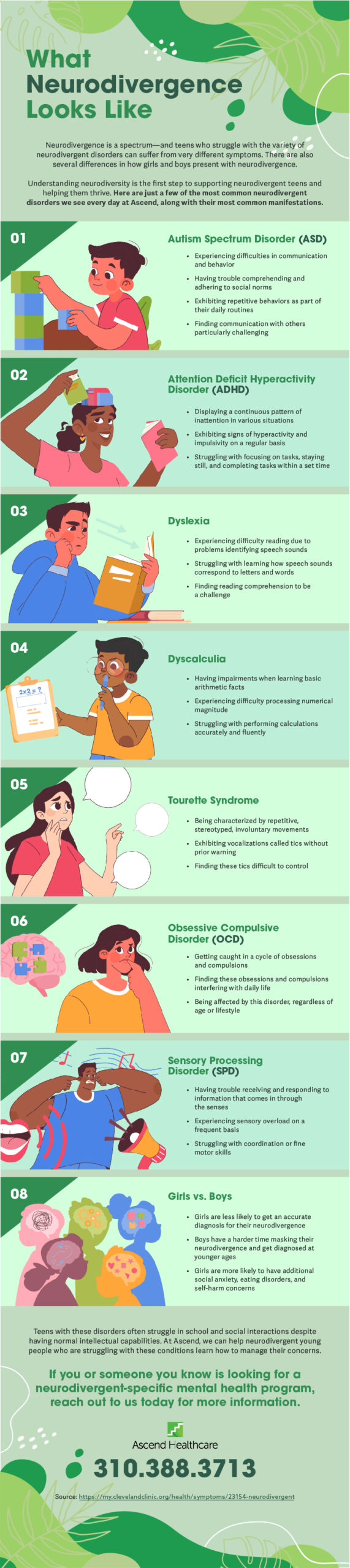
Neurodivergence isn’t just a buzzword — it’s a real and important aspect of human diversity. While neurodivergence is often associated with conditions like autism and ADHD, it actually encompasses a wide range of neurodevelopmental variations that exist on a spectrum. For teens, understanding different types of neurodivergence can help them better appreciate their own experiences and those of others.
If you’re interested in learning about the different types of neurodivergence for yourself or a loved one, check out this overview from Ascend.
Understanding Neurodivergence
Neurodivergence refers to the natural variations in human brain structure and function that exist on a spectrum. It is often used interchangeably with “neurodiversity,” which acknowledges the value of these differences and promotes acceptance and inclusion for individuals who are neurodivergent.
While neurodivergence is a spectrum, it is not a disorder or a deficit, and it does not need to be fixed or cured. Neurodivergent individuals simply have different ways of processing information, communicating, and relating to the world around them.
Some of the hallmarks of neurodivergence include:
- Atypical sensory processing
- Difficulties with social communication and interaction
- Differences in learning and memory
Even with many commonalities, each individual is unique and may experience these symptoms in different ways.
Types of Neurodivergence
There are several types of neurodivergence, all or some of which may be affecting an individual. Here’s a breakdown of the most common.
Autism Spectrum Disorder (ASD)
ASD is a neurodevelopmental disorder that affects social interactions and communication. It is characterized by difficulties with social skills, repetitive behaviors or interests, and sensory sensitivities. While every person with ASD is different, some common traits include difficulty understanding nonverbal communication, preference for routine and predictability, and challenges with transitions.
One misconception about ASD is that individuals are either “high-functioning” or “low-functioning.” In fact, each person with ASD has their own unique strengths and challenges. The more we learn about ASD, the better we can address the needs of individuals to ensure they can all comfortably participate and contribute to society.
Attention-Deficit/Hyperactivity Disorder (ADHD)
As stated in the name, ADHD is a disorder that affects attention, impulsivity, and hyperactivity. It’s one of the most common types of neurodivergence and often presents in childhood. Individuals with ADHD may struggle with staying focused, managing emotions, and controlling impulses. They may also have difficulty with organization and time management.
While ADHD can be challenging, it also brings unique strengths. Many individuals with ADHD are highly creative and energetic, and have a unique way of thinking.
Dyslexia
Dyslexia is a learning disorder that affects reading and writing skills. In the past, we thought it was related to a person’s intelligence or the effort they applied to their work, but it’s actually a condition that affects the way an individual’s brain processes language. While dyslexic people may have a hard time with spelling, writing, or reading, they often excel with problem-solving and spatial reasoning.
There are a number of strategies that help those with dyslexia overcome challenges in school and work to achieve their full potential, including voice recordings, graphic organizers, and learning through music.
Tourette Syndrome (TS)
TS is a neurodevelopmental disorder that involves involuntary movements and vocalizations called tics. It’s often misunderstood and stigmatized due to media portrayals of extreme cases. However, the majority of individuals with TS lead normal lives and are able to manage their symptoms.
Tics can range from mild to severe and may change over time. They can also be suppressed for short periods, but this often leads to increased anxiety and tension.
This is not an exhaustive list of the neurodivergence spectrum — and there are many other expressions, combinations, and types of neurodivergence.
Supporting Neurodivergent Teens
Understanding the different types of neurodivergence is crucial for supporting individuals, especially teens who may be struggling to understand and accept themselves. At Ascend, we believe in promoting neurodiversity and providing individualized care for each person’s unique needs.
Some of the ways we support neurodivergent teens include:
- Providing a safe and inclusive space for them to explore their identity
- Teaching strategies to help them manage challenges and build on their strengths
- Helping them develop self-awareness, self-compassion, and self-confidence
- Facilitating positive social connections with like-minded peers
- Addressing differences in the neurodivergence spectrum for boys vs. girls
By embracing neurodiversity and recognizing the value of each individual’s differences, we can create a more accepting and inclusive world for all.
Neurodiversity in Boys vs. Girls
Part of the way we create more effective treatment plans for our teens involves a comprehensive understanding of how these disorders affect different ages and genders. For example, boys have a harder time masking their neurodivergence, which results in a diagnosis at a younger age. Additionally, girls most often have social anxiety, self-harm concerns, and eating disorders in addition to their neurodivergent disorder.
Because we’re familiar with how each type of neurodivergence may present in boys vs. girls, as well as children vs. teens, we can do a better job or supporting the clients under our care.
Call Ascend Today
If you or a loved one is struggling with a neurodivergent disorder, Ascend is here to help! We have a residential treatment facility called Haven that’s specifically designed to address neurodivergence. Reach out to our team at 310.388.3713 or contact us online to get started. We’re here to support neurodivergent teens in their journey toward self-discovery and acceptance.